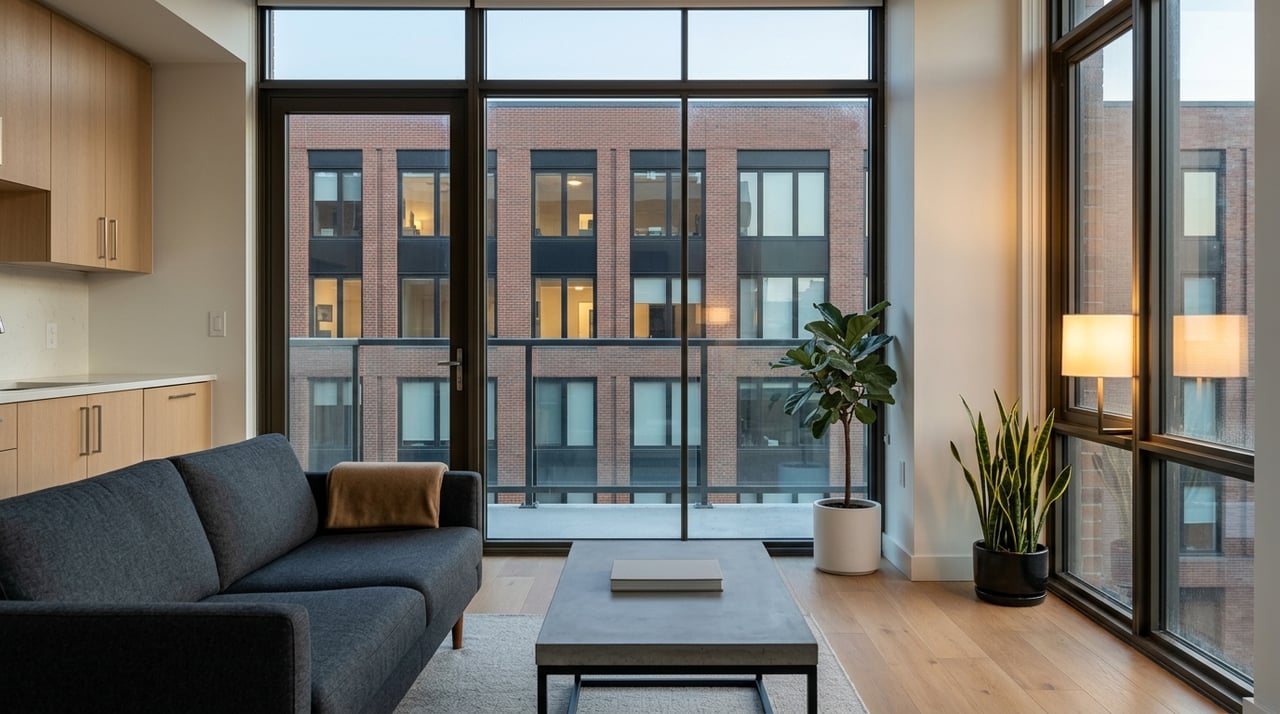
Downtown Denver Condo Market Trends Buyers Should Watch
June 4, 2026
June 4, 2026
If you have been watching downtown Denver condos, you have probably noticed a shift. The market is still active, but it is no longer moving as one big, fast-paced category where every listing follows the same pattern. Today, buyers, sellers, and investors need a more precise view of what is happening tower by tower and block by block. In this guide, you will see how the downtown Denver condo market is evolving, what the latest data suggests, and how to make smarter decisions in a more selective market. Let’s dive in.
Downtown Denver is evolving from a primarily office-focused center into a more mixed-use residential core. The Downtown Denver Partnership and the City and County of Denver have outlined a long-term vision that includes reducing vacant office space, growing the residential population, and adding more housing in Upper Downtown.
That broader shift matters if you are thinking about condo values and long-term demand. In March 2026, downtown weekday return-to-office activity reached an average of 74%, pedestrian activity was at 84% of March 2019 levels, and the center city added 564 newly occupied units so far in 2026, including 263 in the downtown core. More residents and more daily activity can support the kind of street-level energy that many condo buyers want.
If you are buying or selling right now, the clearest theme is this: downtown Denver is active, but more selective than it was in peak years. Recent market snapshots show that listings are moving, but buyers have more time to compare options and negotiate.
Realtor.com shows 241 homes for sale in Downtown Denver, with a median listing price of $597,000, a median of 54 days on market, a median price per square foot of $518, and a 98% sales-to-list-price ratio. Year over year, that same dataset shows inventory up 12.67%, median sale price per square foot down 4.78%, days on market up 17.39%, and median sale price down 5.09%.
Redfin’s rolling three-month data ending in April 2026 tells a similar story from the closed-sales side. It reports a median sale price of $574,786, median days on market of 32, 62 homes sold, and a 98.4% sale-to-list ratio, with about 39.4% of homes taking price drops. While the numbers differ because the sources measure different things, both point to a market with more room for price discovery.
One of the biggest changes in downtown Denver is that broad neighborhood averages only tell part of the story. Condos are trading in a market where the building itself often matters more than the ZIP code headline.
That is easy to see in nearby pricing differences. Realtor.com shows LoDo with a median listing price of $675,000, the Denver Central Business District at $469,000, Central Denver at $572,500, and Downtown Denver overall at $597,000. Buyers are not comparing identical homes. They are comparing very different buildings, floor plans, parking setups, amenity packages, and walkable surroundings.
For sellers, this means generic downtown pricing can lead you in the wrong direction. Your real competition is usually not every condo downtown. It is the set of units in your building, or in a very small group of comparable towers, that a buyer would realistically consider side by side.
Metro-level data also helps explain why downtown condos are behaving differently than detached homes. REcolorado reported that in January 2026, the Denver metro had 8,203 active listings, about 18 weeks of inventory, and a median Days in MLS of 56 overall. Attached homes were slower at 64 days, compared with 53 days for single-family homes.
By April 2026, the broader metro market had picked up seasonally, with about 12 weeks of inventory and a median Days in MLS of 15 overall. Even so, attached product tends to move more deliberately than detached homes. For downtown condo owners and buyers, that means patience, pricing discipline, and strong building-level strategy matter.
Downtown Denver is increasingly behaving like a collection of mini-markets. A building-level 80202 condo report showed meaningful differences in how major towers performed over a 365-day period.
In that dataset, Spire posted a median 74.5 days on market and a 98.07% close-to-list ratio. Brooks Tower posted 74 days and 96.88%. The Coloradan posted 88 days and 96.17%. McGregor Square Residences showed 140.5 days, and One Lincoln Park showed 200.5 days.
That spread is important. It suggests that two condos with similar square footage or price points can perform very differently depending on the tower, the specific unit, and how the listing is positioned. The same report also noted that seller-paid credits are common in several buildings, meaning negotiation often happens through concessions as much as through price cuts.
It is tempting to assume that newer buildings always outperform older ones, but downtown Denver does not work that simply. Buyers are weighing a bundle of factors, and age is only one piece of the picture.
The Coloradan, completed in 2019, offers a strong amenity package that includes an 18th-floor club lounge and pool deck, a fifth-floor community garden, a fitness center, an owners’ lobby and library, a curated art collection, and Union Hall. Spire, completed in 2009, is a 42-story LEED-certified tower with more than 40,000 square feet of amenities described in current listing copy, including a year-round heated pool, hot tub, fitness center, lounges, theater room, dog park, guest suites, and EV charging.
Brooks Tower, dating to the late 1960s, remains notable for its long-standing high-rise presence and amenities such as a heated outdoor pool, sun deck, grilling area, fitness center, resident club room, conference room, game room, guest parking, and 24-hour secure access. One Lincoln Park, also completed in 2009, offers 177 residences, terraces, a pool deck, and a transit-oriented location.
The key takeaway is that buyers are not just paying for age. They are paying for the full package, including renovation quality, HOA and service profile, floor plan efficiency, views, parking, and whether the amenity mix fits current lifestyle preferences. That is one reason building-level expertise matters so much in this market.
Compared with some other urban Denver neighborhoods, downtown appears more negotiable right now. Redfin describes Downtown Denver as somewhat competitive, with homes selling in about 36.5 days and average homes going pending in around 37 days.
By comparison, Washington Park and Cherry Creek are both described as very competitive, with average pending times around 16 and 22 days, respectively. If you are buying downtown, that can create more time to compare buildings, review HOA details, and structure an offer carefully, especially on listings that have been sitting.
That does not mean every condo is a bargain. Well-positioned units in popular towers can still attract attention. It does mean buyers often have more leverage than they would in a tighter neighborhood or in a faster market cycle.
If you are selling a downtown condo, this is not the kind of market where you can rely on broad averages and hope for the best. Buyers are comparing details closely, and they are quick to notice when a unit feels overpriced relative to its building peers.
That makes pricing accuracy especially important. A condo that launches too high may sit, require reductions, or end up needing credits to get a deal together. In a market where many buyers are watching closely and waiting for the right fit, first impressions matter.
Presentation matters too. In a building-specific market, professional photography, smart staging, clear amenity positioning, and strong unit-level storytelling can help buyers understand why your home stands out from similar options in the same tower or nearby buildings.
If you are evaluating a downtown condo as an investment, the rental market matters as much as the resale market. REcolorado reported that in April 2026, median rent was $2,695, leased properties were down 10% year over year, and median Days in MLS for rentals rose to 23.
That points to a rental market that is still active but softer than peak conditions. For investors, that means underwriting should account for a more balanced leasing environment, especially in towers with higher HOA costs or units that may take longer to resell.
In practical terms, cash flow assumptions may need a little more cushion. Exit timing may matter more, and building rules around leasing should be reviewed carefully before you buy.
Downtown Denver’s condo market is not declining into irrelevance. It is maturing into a more nuanced, more building-specific market where the old one-size-fits-all approach no longer works.
For buyers, that can be good news. You may have more choice, more time, and more negotiating room than in faster submarkets. For sellers, the opportunity is still there, but success depends on accurate pricing, strong presentation, and a clear understanding of your true competition.
For anyone making a move downtown, the real question is no longer just, “How is downtown Denver doing?” The better question is, “How is this building, this unit type, and this pricing strategy performing right now?” That is where the best decisions are made.
If you want a clearer picture of how your building fits into today’s downtown market, Mark Callaghan can help you interpret the data, compare true peers, and plan your next move with confidence.
Stay up to date on the latest real estate trends.
Get assistance in determining the current property value, crafting a competitive offer, writing and negotiating a contract, and much more. Let me guide you through your home-buying journey, contact me today!
Get in touch with Mark to learn more.
201 Columbine St., #200 Denver, CO 80206