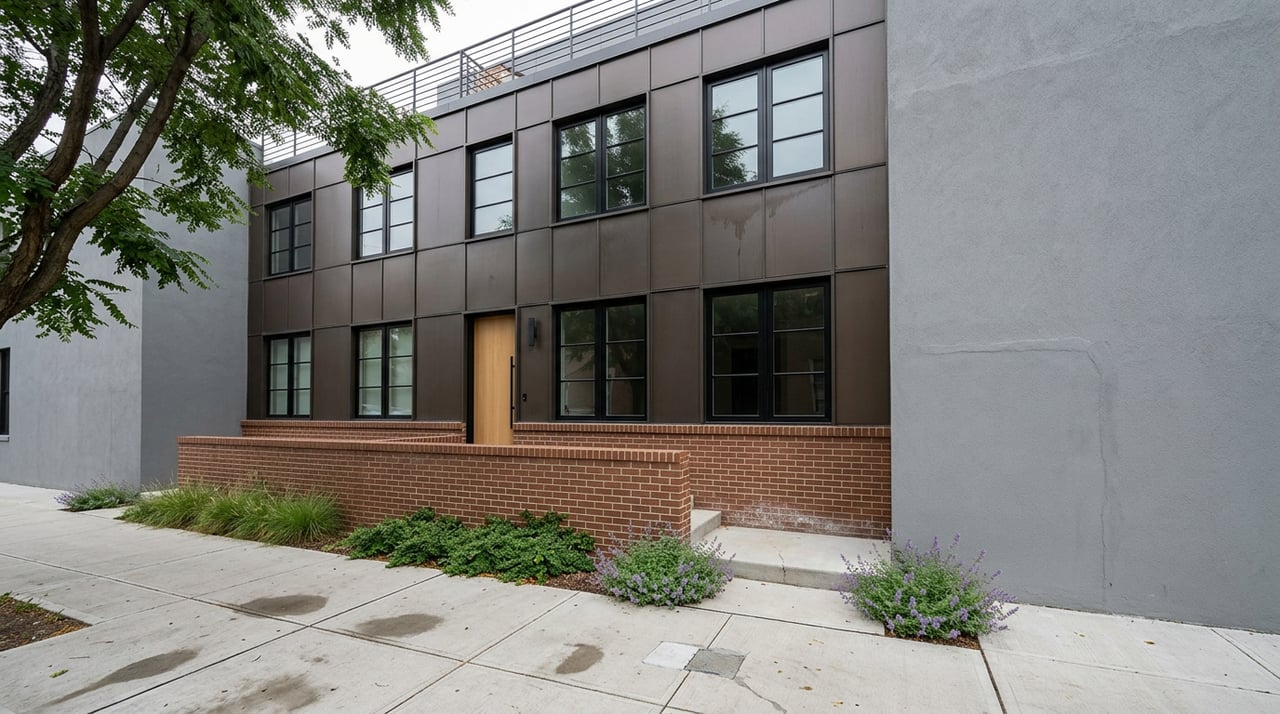
LoHi Median Home Price: Why Two Markets Are Emerging
August 13, 2026
August 13, 2026
Search LoHi on five different sites this week and you'll get five different answers for what a "typical" home costs there. One report puts the median at $597,495. Another says $752,000. A third lands at $865,000. A fourth, looking only at single-family homes, reports $1.15 million with new construction routinely clearing $1.8 million. None of these numbers is wrong. They're measuring different things, and the gap between them is the actual story a buyer needs before writing an offer in this neighborhood.
Here's what each figure is really counting.
| Source | Period | What it measured | Reported median |
|---|---|---|---|
| Redfin | February 2026 | All closed sales, LoHi | $752,000, down 11.9% year over year |
| Neighborhood market report | March 2026 | All closed sales, LoHi | $865,000, up 0.4% year over year |
| Home value estimate | 2026 | Automated valuation, LoHi | $597,495 |
| Luxury market forecast | April 2026 | Single-family homes only, LoHi | $1,150,000, new construction over $1.8 million |
| Trailing 90-day condo data | Reported mid-2026 | Condos only, LoHi | $612,500 sold median, $491 per square foot |
Every one of these is technically accurate for what it counted. None of them tells you what your own search results will look like, because none of them tells you which LoHi you're shopping in. A Victorian on a quiet side street, a new-construction townhome with a rooftop deck, and a mid-rise condo unit are three different products with three different demand curves right now, and the blended "median" flattens all of it into a single number that fits none of them well.
The clearest evidence of that split doesn't come from a LoHi-specific source at all. It comes from the Denver Metro Association of Realtors' July 2026 report, which broke the metro down by property type and found a market moving in two directions at once. Detached homes closed at a median of $660,000, while attached homes sat at $380,000. That attached-home figure was down 2.56% from both June 2026 and the same month a year earlier, and attached-home sales fell 12.18% year over year, with the segment carrying roughly 5.7 months of supply and a median of 40 days on market.
A Denver-area agent tracking condo pricing specifically put the contrast in blunt terms to the Denver Gazette in late July: single-family homes are "right around all-time highs on those." The same reporting found that Denver condo prices, for sales through July 20, 2026, sit about 14% below their 2020 to 2022 peak, with per-square-foot pricing down closer to 22 to 23%. In June 2022, a typical Denver condo sold in about a week and closed slightly above its asking price. By June 2026, that had stretched to nearly seven weeks, closing roughly 5% below the original ask.
LoHi's own condo inventory shows the same strain at a neighborhood scale. Trailing 90-day data for the neighborhood recorded just six condo sales against 43 active listings, a pace that works out to close to two years of supply at current velocity, several multiples of the metro's already buyer-favorable 5.7 months. That's not a LoHi problem specifically. It's the Denver-wide condo slowdown showing up in one of the city's most searched zip codes.
The mechanism behind the split isn't taste or location. It's the master insurance policy.
When a condo association insures an entire building, that policy has been getting dramatically more expensive across Colorado, driven primarily by hail losses rather than the wildfire risk most out-of-state buyers assume. Average homeowners insurance costs in Colorado have climbed roughly 137% over the past decade, and some individual HOA master policies have reportedly jumped 200 to 500% in recent years as buildings renewed coverage after major hail events. That cost lands on every unit owner as a higher monthly due, and lenders count that due against a buyer's debt-to-income ratio the same way they count a mortgage payment. A condo that looks $150,000 cheaper than a townhome three blocks away can qualify a buyer for less, not more, once the HOA line item is added to the math. The same Gazette reporting noted the gap between renting and buying in Denver has widened as a result, estimating buyers now pay roughly 80% more per month to own than to rent a comparable unit.
Single-family homes and most party-wall townhomes in LoHi don't carry that exposure the same way. Owners typically insure their own structure individually, so a spike in one owner's premium doesn't ripple through a shared association budget the way it does in a 43-unit condo building.
Not every condo in LoHi is caught in this. The same July 2026 DMAR data that showed the broad attached segment sliding also showed something else entirely at the top: homes priced at $1 million or more sold at a median of just 17 days on market through July, and the luxury attached segment specifically posted a 26.09% jump in sales from June and an 81.25% jump from a year earlier, with price per square foot reaching $572. That growth is being driven by specific new inventory rather than a broad condo recovery.
LoHi has its own version of that specific inventory in Espadín, a for-sale condo building developed by Urban Green and designed by local firm Sprocket that pairs residential units with a hotel operation and a restaurant from James Beard-winning chef Dana Rodriguez. Because the building is structured to allow short-term rental income, an owner's unit economics don't rest solely on appreciation. That income stream is exactly the kind of feature that can insulate a building from the HOA-driven demand pullback hitting the rest of the segment, because it gives an owner a way to offset rising dues rather than simply absorb them.
Compare that to Boulder Street Condominiums, marketed under the Kensing LoHi name, a 35-unit new-construction project pursuing LEED and WELL certification with units starting near $460,000. It's a strong building on paper, but it's a standard ownership structure without the short-term rental flexibility Espadín offers, which means its long-term value will likely track the broader condo segment's HOA and insurance trajectory more closely than Espadín's does.
The number you see the first time you search LoHi isn't wrong. It's a blend, and blends are useful for headlines and useless for offers. What actually matters before you write one is whether you're buying into the segment that's near all-time highs or the one still working through an insurance-driven reset, and that's a building-by-building question, not a neighborhood-wide one.
If you're weighing a LoHi purchase against another downtown Denver building or trying to make sense of a listing's HOA disclosures before you write an offer, Mark Callaghan tracks this building-by-building, not just neighborhood-wide. Request the Downtown Denver Market Update for a breakdown of what's actually moving in your price range and property type.
Is a low HOA fee in a LoHi condo building a good sign? Not on its own. A due that's stayed flat for several years can mean a well-funded reserve, or it can mean the association has deferred a large insurance or maintenance cost that's about to arrive as a special assessment. Ask for the reserve study before treating a low fee as good news.
Are single-family homes and townhomes in LoHi still selling quickly in 2026? Detached and party-wall product across Denver has been described as sitting near all-time highs as of late July 2026, while the broader condo segment has slowed. LoHi's mix of Victorian homes and new-construction townhomes has generally tracked the stronger detached side of that split.
Does a lower price per square foot on a LoHi condo mean it's a better deal than a comparable townhome? Only if you run the full monthly cost, including HOA dues and any pending insurance increase, not just the purchase price. A condo priced lower per square foot can still cost more per month than a slightly pricier townhome once the association's insurance-driven dues are factored in.
Stay up to date on the latest real estate trends.
Get assistance in determining the current property value, crafting a competitive offer, writing and negotiating a contract, and much more. Let me guide you through your home-buying journey, contact me today!
Get in touch with Mark to learn more.

201 Columbine St., #200 Denver, CO 80206