What's New on 16th Street Denver in 2026
August 20, 2026
August 20, 2026
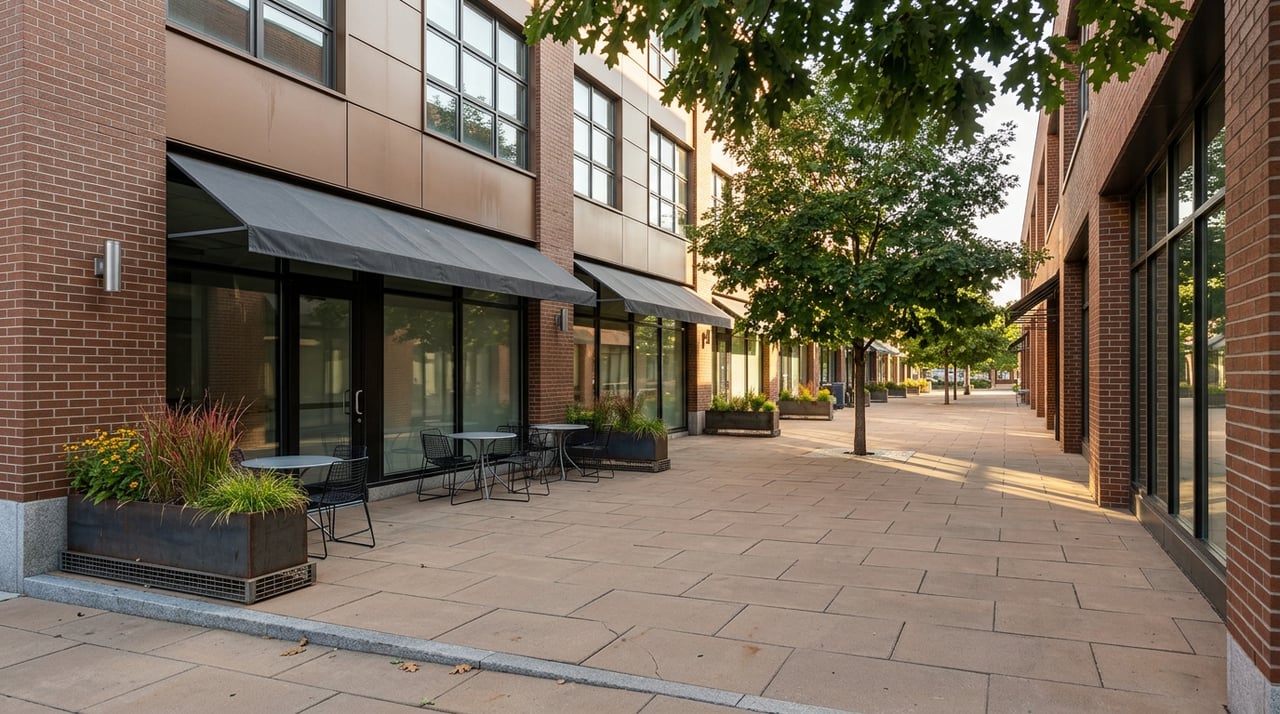
Walk 16th Street on a weekday afternoon this August and the street itself barely resembles the one that shut down for construction back in 2022. Full-grown shade trees line both sides where saplings used to struggle. The old median between bus lanes is gone, replaced by a curbless stretch that can absorb a farmers market or a block party without anyone moving a barricade. Some of the original honey locusts that lined the corridor for decades were milled into benches now sitting outside the Populus Hotel rather than hauled to a landfill. None of this is a rendering anymore. It is finished, and downtown residents are the ones who get to use it on a normal Tuesday instead of reading about it in a press release.
Then you pass the Denver Pavilions. Upper-level windows still carry "For Lease" signs, and foot traffic thins near the theater entrance. Those details add one perspective on the corridor's changes: activity is developing block by block through tenants and city financing, while the Pavilions' future remains under discussion.
According to The Colorado Sun, the Pavilions opened in 1998 as the retail centerpiece of Upper Downtown, and for years it worked exactly as designed. E-commerce and a pandemic-era exodus of office workers changed that math. In April 2026, a ten-person Urban Land Institute panel spent five days studying the two-block complex and concluded that the Pavilions, as built, is obsolete. Kristen Morris, president of the Atlanta development firm Morris & Fellows and one of the volunteer panelists, put it plainly: "The Pavilions has had its time in the sun."
That is not the same as saying downtown is struggling. It is saying one specific 350,000-square-foot building built for a retail model that no longer exists needs to become something else, possibly a mixed-use "social district" rather than a mall. The city has not broken ground on anything yet. The panel's recommendations are a starting point, not a construction timeline, and address the complex itself, while other changes are already visible across the block.
While the Pavilions works out its second act, the storefronts around it have kept moving. The Downtown Development Authority has been quietly financing exactly the kind of small, specific businesses that make a corridor feel occupied rather than staged. Green Spaces Market, a coworking-and-retail concept, received a $4.28 million loan to expand its footprint across 16th Street from the Pavilions. Sundae, a local artisan ice cream shop, took a $750,000 loan to grow its downtown presence. And the historic University Building at 16th and Champa is being converted into mixed-use space with a $15 million loan behind it.
None of these are chain flagships. They are the kind of tenants that show up one at a time, get a line item in a development authority report, and then just start operating like they were always there. The city also rolled out a retail incentive program this year offering grants of up to $450,000 to businesses willing to commit to 16th Street specifically, which is a different approach from relying on a single big-box anchor.
The numbers back up what the sidewalk suggests. Retail and restaurant openings made up roughly 81 percent of all new downtown businesses in 2025, and the city collected close to $82 million in sales tax from retail and restaurant sales that year, an increase of nearly 6 percent over 2024. Foot traffic tells the same story from a different angle: the corridor logged about 775,000 total visits through May 2026, compared with 681,000 over the same stretch the year before, according to Downtown Denver Partnership data. That is real, measured recovery, and it is happening at street level while the Pavilions is still in the planning phase.
It is worth sitting with one more number, because it explains why some blocks feel further along than others. Office vacancy in the Central Business District, which includes the Pavilions, hit 35.5 percent in the first quarter of 2026. A few blocks away, Cherry Creek has one of the lowest office vacancy rates in the country. Same city, same season, two very different daytime populations walking past two very different sets of storefronts. If a block near you still feels quieter at lunch than you'd expect, that gap is very likely why.
The clearest sign that the street itself has changed, rather than just the sales tax spreadsheet, is Glenarm Plaza. It is a city-established common consumption area at 16th and Glenarm, which means you can buy a beer, glass of wine, or cocktail to go from any of the five participating restaurants and carry it into the open plaza space under the Denver sign rather than staying tied to one restaurant's four walls. It is the kind of feature that sounds minor until you are the one standing in it on a Thursday evening, and it did not exist in this form before the renovation.
Zoom out from that one plaza and the corridor's restaurant footprint is bigger than most people clock walking through it. There are roughly 200 retailers and restaurants along the 1.2-mile stretch now, including more than 40 sidewalk cafes and about 20 cart and kiosk vendors. Sixteenth Street alone accounts for roughly 20 percent of downtown's entire restaurant tax base. That is not atmosphere. That is a meaningful chunk of downtown's dining economy concentrated on one street, which provides context for the contrast with the Pavilions' upper floors.
If you have built a Wednesday or Thursday lunch routine around Civic Center EATS, the long-running food truck gathering at Civic Center Park, the location changed this year. The event, which runs from mid-May through mid-October, moved to Bannock Street and the Civic Center Park Meadow for its 2026 season. It is the same dozen-plus food trucks and the same free-to-attend format, just repositioned within the park. Small change, but the kind that actually affects how you plan a lunch break if you work or live nearby.
For residents looking past the daily patio and food truck rhythm, the corridor's calendar has a few fixed points left before the year turns toward fall:
Both are useful markers if you want to see the corridor at full capacity rather than a random Tuesday, and Doors Open Denver in particular is worth building into your calendar if you have been curious what's actually happening inside a building you pass every day without a way in.
None of this means the Pavilions redevelopment doesn't matter. A 350,000-square-foot complex sitting underused in the middle of the corridor will eventually need an answer, and the city's own planning language points toward something closer to a mixed-use social district than a traditional mall. But that answer is still years away, and treating it as the barometer for how downtown is doing right now means missing what has already happened one storefront at a time. The small loans, the new sidewalk cafes, the plaza where you can carry a drink between restaurants, the food trucks that just moved a block over: that is part of the corridor's recovery story, unfolding alongside the Pavilions' planning process.
If you already live down here, none of this requires you to do anything. It just means the block you walk past on the way to the train is doing more than it looks like from a moving car.
Mark Callaghan tracks these shifts building by building and block by block as part of the recurring Downtown Denver Market Update, which covers exactly this kind of change alongside the pricing and inventory data that matters when the time comes to put it to use. Request your Downtown Denver Market Update to keep an eye on what's actually happening down here, not just what's been announced.
This article is general information, not legal, tax or financial advice. Consult a qualified professional about your situation.
Stay up to date on the latest real estate trends.
Get assistance in determining the current property value, crafting a competitive offer, writing and negotiating a contract, and much more. Let me guide you through your home-buying journey, contact me today!
Get in touch with Mark to learn more.
201 Columbine St., #200 Denver, CO 80206