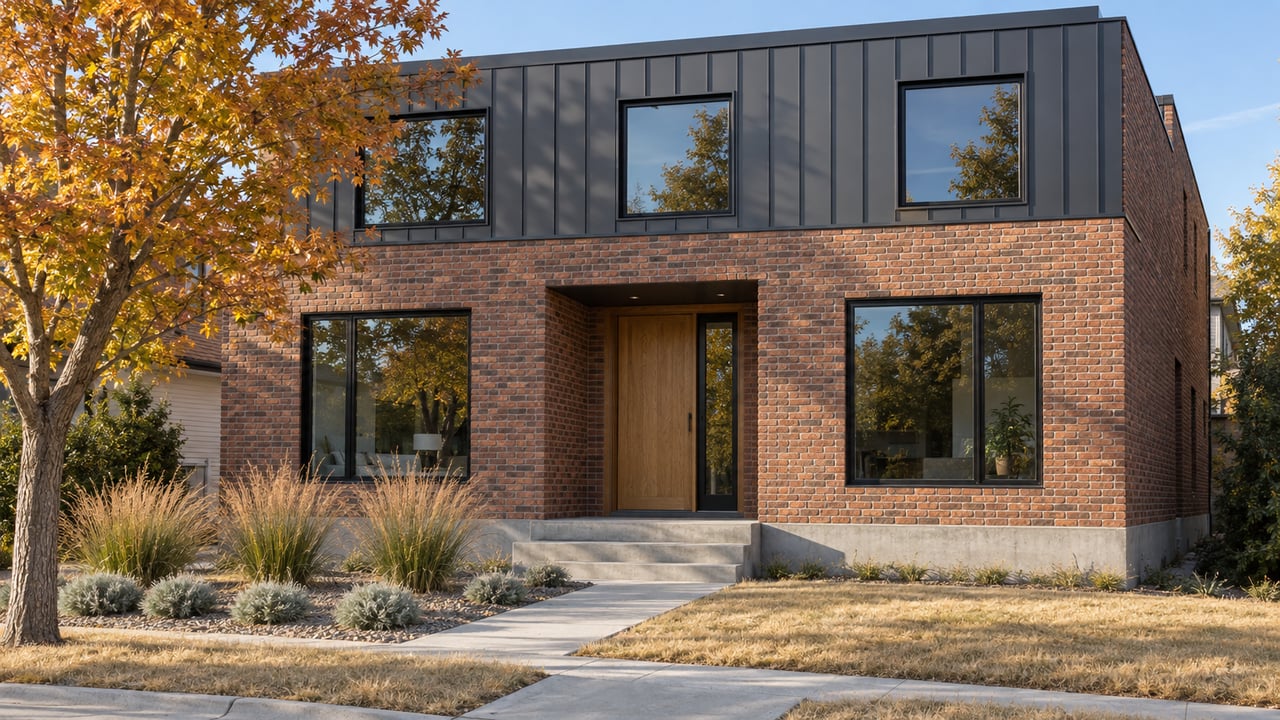
Why West Highland's Old Houses Keep Becoming Bigger Houses
October 15, 2026
October 15, 2026
At 3268 W. 32nd Ave., Ionic, a Denver real estate firm, has filed plans to take down a one-story brick building, a two-story classroom building, a playground and a parking lot on the Renewal Church campus. The main church building stays. In their place, according to concept plans reported by The Denver Post, would go six detached single-family homes on lots 25 feet wide. Five would be two-story houses, and the home closest to West 32nd Avenue would include an attached or detached accessory dwelling unit. The project was under city review when the Post reported it in August 2026.
A developer with a full church campus on a main street chose six narrow detached houses over a row of townhomes. That choice follows the same rule that sets the price of a 1920s bungalow three blocks away. In West Highland, most lots are zoned to become one house. When an old one comes down, the new one is almost always larger.
Denver's Far Northwest Area Plan, released in September 2026, is blunt about it. The existing-conditions report says the majority of land in the planning area is zoned for single-unit development. Two-unit zoning is concentrated along Tennyson between West 38th and West 46th avenues and east of Sloan's Lake Park south of West 29th. There are three smaller pockets: West 33rd and Lowell, West 38th and Mead, and West 43rd/44th and Perry/Osceola. Townhome-capable multi-unit parcels mostly sit next to Main Street or Mixed-Use zones.
That matters for anyone pricing an older West Highland house. A buyer is paying for the structure and for whatever the lot can legally hold next. On most blocks, that next thing is one house. Rising prices in older neighborhoods give owners and investors a reason to demolish an existing home and replace it with a higher-value one, as the plan itself notes. When zoning allows only one unit, the only way to add value is to build a bigger one.
The plan's consultants matched demolition permits to new construction permits. Between June 2015 and May 2026, the Far Northwest planning area produced 434 of Denver's 2,468 residential teardown-and-rebuilds. That's 18% of the city's scrapes in an area holding about 5% of its housing units. A separate Denver Assessor analysis covering 2010 through April 2025 shows what those rebuilds became.
| Area | Single-unit homes replaced by larger single-unit homes, 2010–April 2025 | Single-unit homes redeveloped into 2–9 unit housing, 2010–April 2025 | Share of 2010 single-unit homes replaced by larger ones |
|---|---|---|---|
| West Highland | 59 | 23 | 5.3% |
| Sloan Lake | 121 | 92 | 6.0% |
| Berkeley | 149 | 205 | 5.1% |
| Denver overall | 2,322 | 1,237 | 1.8% |
West Highland replaced single-unit homes with larger single-unit homes at nearly three times the citywide rate. For every rebuild that added units, more than two simply added square footage. On the teardown count, West Highland logged 48 demolish-and-replace projects from June 2015 through May 2026, including 11 in the 2023–2026 window.
The same pattern shows up citywide. On its project page, Denver's planning department says that over the last 15 years an average of 237 houses a year were demolished for redevelopment. About two-thirds were replaced with larger, more expensive single-unit homes, and about one-third with duplexes, rowhouses and similar small multi-unit buildings.
Berkeley is the one exception in the table. It's the only Far Northwest neighborhood where more single-unit homes became missing-middle housing than larger houses, 205 to 149. It also holds the plan's largest band of two-unit zoning, the Tennyson corridor north of 38th. The zoning map and the rebuild tally line up.
Where zoning doesn't allow more units, getting them takes a separate city process, and the Pecos Street site shows what that looks like. As The Denver Post reported in September 2026, JG Architects submitted two options for 3225–3235 N. Pecos St., a site with three existing residential buildings. One option is seven townhouses. The other is a three-story, 20-unit apartment building with three ground-floor retail spaces. The applicant asked the city whether either was feasible, and that guidance would inform any future rezoning request.
The Renewal Church plan, by contrast, went straight to review with detached houses. Its one extra unit is an ADU, which has been allowed in all of Denver's residential areas since December 16, 2024.
Denver's Unlocking Housing Choices project was built to change this. Phase 1 has three strategies, according to the city's planning department:
The retention bonus speaks directly to West Highland's teardown pattern. Today an older house is often worth more to a builder as a cleared lot. A bonus that adds units only if the house stays would give keeping it a value of its own.
In September 2026 the city narrowed the plan. Both bonuses would now apply only to properties within a quarter mile of Blueprint Denver's Transit Priority Streets and rail transit stations. A separate proposal to cap the floor area of new houses was dropped and moved to a future phase, though the broader house-scale standards still apply. Denverite reported that the change shrinks the affected area by about half. It quoted city planner Rob Elsasser at a briefing for city officials:
"Ultimately our charge is to bring something forward that we can get adopted. And if we have to take steps to get there, then that's what we recognize we need to do."
The dropped cap would have been large enough to matter. An April 16, 2026 advisory committee deck tested a 4,000-square-foot gross floor area limit for a single unit and 5,000 square feet for a duplex. That test covered certain Urban Edge zone districts on lots of 6,000 to 8,999 square feet, and it was framed as testing assumptions, not a final table. With the cap pushed to a later phase, nothing in the current draft limits a new house's total square footage.
The revised map is still a draft. The city's September 2026 presentation calls final mapping incomplete. It says revisions will exclude areas where transit service can't be provided, and that about 54% of the affected residential-zoned land falls inside the draft buffer. Denver Moves: Transit, the plan behind those corridors, labels 38th, Federal, Sheridan and Speer among its corridors in this part of the city. Exact boundaries for Highland aren't settled.
If the bonus passes in its current form, two otherwise identical West Highland bungalows could face different futures. One within a quarter mile of a qualifying corridor would gain a way to add units while keeping the house. One deeper in the grid would keep today's rules, where the main way to add value is a larger single house. On those interior blocks, the redevelopment math that produced 59 larger homes would stay much as it is.
None of this is law yet. The city's project page still says late 2026 for a Council decision. The September presentation, the newer document, schedules committee review, a hearing and a vote for spring 2027. Denverite reported that CPD won't bring the proposal to Council until spring at the earliest.
Metro-wide numbers fill in the rest. In September 2026, the Denver metro median close price for detached single-family homes was $635,000, down 2.1% from August and flat from a year earlier, The Denver Post reported from DMAR data. The top of the market is moving faster. According to the Denver Metro Association of Realtors' September 2026 report, sales of $1 million and up rose 1.99% year to date through September to 4,449. Detached homes in that segment had a median of 19 days in MLS that month.
These figures cover the whole metro, not 80211. Still, they fit the incentive the zoning creates. A flat middle market and a quicker luxury market favor turning a modest older house into a large new one, and West Highland's zoning makes that the main rebuild allowed on most lots.
Is Denver capping the size of new houses? Not right now. The city removed the floor-area limit from Phase 1 and moved it to a future phase. Broader house-scale and form standards remain in the proposal.
Can a West Highland owner add a second unit today? Denver has allowed accessory dwelling units in all residential areas since December 16, 2024, which is why the Renewal Church plan includes one. Duplexes and townhomes depend on the zoning of the specific lot.
Has anything in North Tennyson been newly landmarked? No new designation is reported. The September 2026 Far Northwest report describes North Tennyson's early-20th-century homes as a relatively intact group that needs further survey and community input before any historic focus area could be identified.
To price an older Highland home, you need to know how it's zoned, how close it sits to a Transit Priority Street, and what Council does in 2027. Mark Callaghan tracks these lot-level details along with the sales data. Request your Downtown Denver Market Update for a current look at the numbers behind the house you're considering.
This article is general information, not legal, tax or financial advice. Consult a qualified professional about your situation.
Stay up to date on the latest real estate trends.
Get assistance in determining the current property value, crafting a competitive offer, writing and negotiating a contract, and much more. Let me guide you through your home-buying journey, contact me today!
Get in touch with Mark to learn more.
201 Columbine St., #200 Denver, CO 80206